
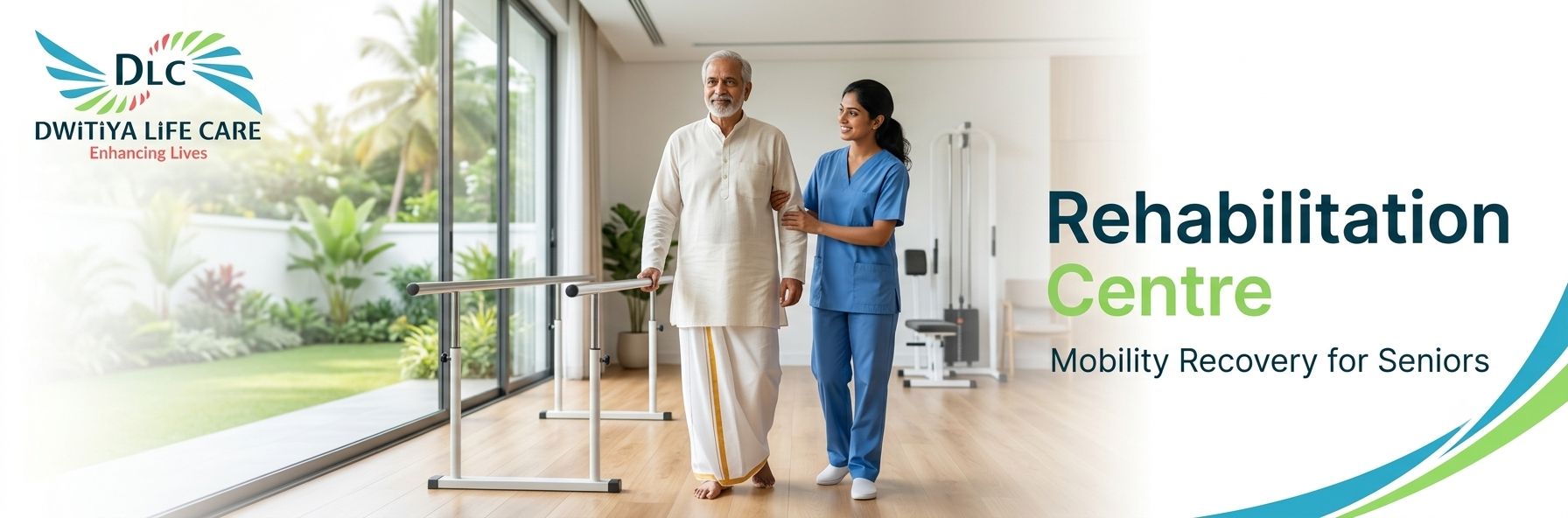
A quick clarification first, because the word carries more than one meaning. This article is about medical and physical rehabilitation, the kind that helps someone walk, move, and manage daily life again after surgery, a stroke, a fall, or a long illness. It is not about addiction treatment, which is a separate field entirely.
With that settled, here is the question families actually ask. My father is home from hospital and he is recovering, slowly. Do we need a rehabilitation centre, or will time and rest do the job?
Sometimes time is enough. Often it is not, and the difficulty is that the difference only becomes obvious months later, when the window to fix it has narrowed.
What rehabilitation is designed to do
Rehabilitation is structured, supervised therapy aimed at restoring function that illness or injury has taken away. Its measure of success is not a scan or a blood report. It is whether the person can stand from a chair, climb a stair, walk to the gate, bathe themselves, and sleep without pain.
That focus on function is what separates it from ordinary medical follow up. A surgeon confirms the joint has healed. A rehabilitation team asks whether the person is actually using it properly, and if not, why.
The four situations where it genuinely helps
After surgery
Knee and hip replacements, spine procedures, and fracture repairs all share the same pattern. The operation is the first half of the story. The following six to twelve weeks decide how well the person moves a year later.
Early therapy controls swelling and stiffness and restores small safe ranges of movement. The middle phase rebuilds strength in the muscles around the joint. The later phase retrains balance, walking pattern, stairs, and stamina, so the body stops compensating in ways that create pain somewhere else.
Two things derail this. Stopping early, once the pain settles and the person feels fine walking around the house, which leaves them with a permanent limp and weakness they never quite explain. And pushing too hard too soon, which sets recovery back weeks.
After a stroke
Stroke recovery is the clearest case for structured rehabilitation, because the brain’s capacity to rewire is highest in the early months and declines afterwards. Time genuinely matters here.
Depending on what was affected, therapy may cover limb strength and movement, balance and walking, hand function, swallowing, and speech. Progress can be uneven, with fast gains followed by plateaus, which is normal and not a reason to stop.
After a fall or fracture
A fall in an older adult is rarely just an injury. It is usually a signal that balance, strength, vision, blood pressure, or medication has changed. Treating the fracture without addressing the cause leaves the person likely to fall again, and second falls tend to be worse than first ones.
Good rehabilitation after a fall covers both the physical recovery and the fear that follows it, because many older adults quietly reduce their movement afterwards, which weakens them further and makes another fall more likely.
After a long illness or hospital stay
Extended bed rest is more damaging than families expect. Muscle strength drops measurably within days, and older adults lose it faster and regain it slower. Someone who was walking independently before a three week admission can come home unable to manage stairs.
This kind of deconditioning responds very well to structured therapy, and very poorly to rest.
Signs that recovery at home has stalled
If someone is already recovering at home, these are the practical indicators that supervised rehabilitation would help.
Progress has flattened for two or three weeks with no further improvement. They are avoiding a movement rather than working on it, such as never using the stairs or never using one arm. Their walking pattern has changed and stayed changed, with a limp, a shuffle, or a widened stance. They need help with tasks they managed alone before the event. Pain is limiting movement rather than reducing week by week. They have become fearful of moving. Or the home exercises they were given have quietly stopped, which happens in most households within a fortnight.
Any one of these is worth a professional assessment. Several together usually mean recovery needs structure rather than more time.
What a rehabilitation plan involves
It starts with an assessment covering strength, joint movement, balance, walking pattern, pain, and the ability to manage daily tasks. From that, therapists set realistic weekly targets.
Sessions typically combine a gentle warm up, guided strength and flexibility exercises, balance and coordination work, and practice of real everyday movements. The pace follows the person rather than the calendar. A well judged session leaves someone tired in a satisfied way, never in pain or discouraged.
Progress is measured and the plan is revised as ability improves. Families are shown exercises to continue between sessions, because consistency is what turns effort into recovery.
Why older adults need supervision
Rehabilitation for a seventy year old is not the same exercise programme at a slower speed.
Balance deficits, reduced bone density, existing joint problems, heart or lung conditions limiting exertion, and several medications that affect blood pressure or alertness all change what is safe. A generic routine found online does not account for any of that, and the cost of a second injury during recovery is high.
Supervision also solves the consistency problem. Recovery that depends on someone remembering to do exercises at home, while unwell and tired, usually does not happen.
Getting the timing right
The most common regret families express is not that they arranged rehabilitation and it was unnecessary. It is that they waited, assumed time would do the work, and started only after months had passed and progress had settled into something permanent.
If someone in your family is recovering from surgery, a stroke, a fall, or a long hospital stay, an assessment early is worth far more than an assessment later.
At Dwitiya Life Care, our rehabilitation services in Bangalore are delivered by trained therapists who assess each person individually, set a plan, monitor progress, and keep families informed at every stage. Support is available at both our Girinagar and Jayanagar centres in Bangalore.
If you are unsure whether recovery at home is going as it should, speak to our team. An assessment will tell you clearly, one way or the other.