
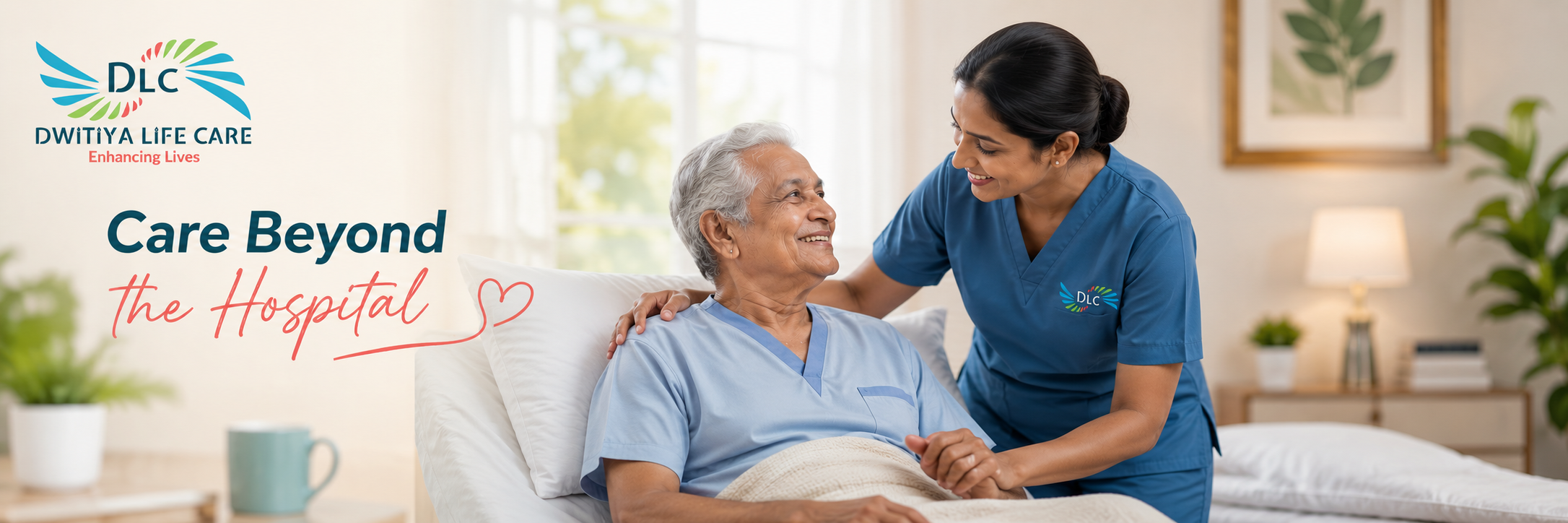
The discharge papers are signed. Everyone feels relieved. You bring your father home, settle him into his own bed, and assume the hard part is behind you.
It usually isn’t.
The hospital treats the crisis. What happens in the weeks that follow, the slow, unglamorous work of actually getting better, is where recovery is either won or quietly lost. This is the part families underestimate the most, and it’s exactly why post hospitalization care matters. A surgery can go perfectly and still end in a readmission three weeks later because nobody was watching the small things at home.
Here’s the uncomfortable truth most families learn the hard way. The hospital was never going to finish the job.
The Weeks After Discharge Are When Recovery Actually Happens
Hospitals discharge earlier than they used to. Beds are needed, insurance has limits, and a patient who is stable is sent home even if they are nowhere near independent. So the real recovery starts the day you leave.
This window is fragile. A missed medication, a wound that nobody checks properly, a fall on the way to the bathroom at 2am, any one of these can undo weeks of treatment in a single night. Most setbacks after a hospital stay don’t come from the original illness. They come from the gaps in care after it.
That gap is the problem.
In a typical Indian home, the people willing to help are working children, an elderly spouse, or a relative who visits when they can. Love is not the issue. Trained eyes are. Our in patient rehabilitation services exist for exactly this stretch, when someone needs more than a home can give but no longer needs a hospital.
Fewer Hospital Readmissions When Someone Is Actually Watching
A readmission is more than a setback. It’s a second round of stress, cost, and risk, often for something that could have been caught early.
Supervised recovery changes the odds. When a nurse notices that a wound looks slightly red today, or that your mother’s breathing has changed, or that she hasn’t eaten properly in two days, that observation gets acted on before it becomes an emergency. At our centre, nursing care runs 24×7 and doctors stay on call, so nothing waits till morning.
That’s the whole point.
Compare that to home, where a worrying symptom at midnight usually means a panicked search for a hospital and an ambulance you hope arrives in time. Our out patient services and on site support mean consultations, physiotherapy, and basic diagnostics happen in one place, without dragging a recovering patient across the city for every small thing.
Healing Is More Than Just Taking Medicines on Time
People think recovery is about pills and rest. It’s about far more than that.
Real recovery is physiotherapy that rebuilds the strength lost during weeks in a hospital bed. It’s nutrition planned around a diabetic or hypertensive body, not just whatever is easy to cook. It’s getting someone to move a little each day so their muscles don’t waste and their lungs stay clear. Skip these, and a patient can technically be cured of their illness while still being unable to stand, walk, or feed themselves.
One supervised week of structured rehab does more than a month of well meaning but unguided care at home.
The emotional side matters too. A lot of older patients come home from hospital quiet, low, and frightened of becoming a burden. That fear slows healing in ways no medicine reaches.
Care That Takes the Crushing Weight Off the Family
There is a cost to family caregiving that nobody puts on the bill. Exhaustion. Guilt. The slow burnout of a daughter who hasn’t slept properly in a month.
You can love someone deeply and still not be equipped to manage their catheter, their wound dressing, their physiotherapy schedule, and their medication chart while holding down a full time job. That isn’t failure. It’s just reality. Professional post hospitalization care lets you go back to being a son or a daughter instead of an untrained nurse running on no sleep.
That shift matters more than people admit.
For families who only need a short break, or help during a tricky early phase, our short term respite care covers anything from a few days to a few weeks. You step away. They stay safe.
Knowing When Home Care Isn’t Enough Anymore
Some recoveries can happen at home with a little help. Others can’t, and pretending otherwise is risky.
If your loved one needs regular wound care, oxygen support, help moving from bed to chair, or close monitoring after a major surgery or a stroke, a structured centre is safer than a bedroom with good intentions. The honest test is simple. If a sudden complication at home would leave your family scrambling, that’s a sign the recovery needs trained hands nearby.
Better to decide that early than after a fall.
We see families arrive worn down, convinced they should have managed alone. They shouldn’t have to. Choosing supervised care isn’t giving up on your parent. It’s giving them the best shot at walking out stronger than they walked in.
Frequently Asked Questions
What exactly is post hospitalization care?
Post hospitalization care is the structured support a patient gets after being discharged from hospital, during the recovery phase. It usually includes nursing supervision, medication management, physiotherapy, wound care, nutrition, and monitoring for complications. The goal is simple, to help someone recover fully and safely instead of being readmitted because something went unnoticed at home.
How long does someone usually need care after a hospital stay?
It depends entirely on the condition. A minor procedure might need a week or two of support, while recovery after a stroke, major surgery, or a long ICU stay can take several weeks or months. There is no fixed limit at our centre. Care can be arranged for as short or as long as the recovery genuinely requires.
Is a rehabilitation centre really safer than recovering at home?
For complex recoveries, yes. Home is comfortable but rarely equipped for sudden complications, round the clock monitoring, or daily physiotherapy. A centre gives you trained nurses, on call doctors, and proper equipment in one place. For simpler cases, home with some professional help can work fine. The deciding factor is how much medical supervision the patient actually needs.
Can the family visit during post hospitalization care?
Yes, and we encourage it. Familiar faces help recovery. At our Bangalore centres, visiting hours are kept generous, and in many cases a family member can stay overnight when it genuinely helps the patient. Staying connected matters, so phone and video calls are arranged easily whenever families cannot visit in person.
Recovery after a hospital stay isn’t something to figure out alone, and you don’t have to. If your family is facing a discharge and you’re unsure how to manage the weeks ahead, come talk to us or get in touch with our care team. We will walk you through what your loved one actually needs, with no pressure either way.